
Apollo Foods' Pathway Away from Gas
Apollo Foods, the Hawke's Bay beverage manufacturer behind Boring Oat Milk, Picky and The Apple Press brands, was facing rising gas prices and needed clearer evidence before making major infrastructure investment decisions.
The challenge wasn't simply finding a cheaper fuel. It was understanding Apollo's true process heat demand well enough to see which transition options were practical, which risks needed to be managed, and which decisions could wait.
The Challenge
Apollo's existing boiler was being pushed to its limits, not by average demand, but by sharp, short-duration spikes driven by on-demand Clean-in-Place (CIP) heating. Hourly supplier data did not show those spikes, but they were critical to understanding the true peak load the boiler needed to manage.
Without understanding the true shape of demand, it would have been easy to make the wrong call: specifying a boiler that was larger than needed, ruling out viable options too early, or missing the opportunity to smooth demand peaks with buffer storage. Getting this right helped Apollo reduce the risk of over-investing or locking itself into infrastructure that would not fit its future operating needs.
Our Approach
Whirika was engaged to deliver two complementary pieces of work: a boiler replacement options assessment and a process heat demand reduction study. Together, these gave Apollo the supply-side and demand-side evidence needed to understand its options before making significant infrastructure decisions.
The demand reduction work, led by Carl Newby and Lloyd McGinty, required getting underneath the hourly gas data. To capture the sub-minute demand spikes driving Apollo's boiler management challenges, Carl designed and 3D-printed a custom housing for a timelapse camera, then set it up to photograph the gas meter at 30-second intervals. Over the monitoring period, this generated tens of thousands of images. Rather than manually processing them, Carl used AI to analyse the image data at scale, extract meter readings, and build a high-resolution demand dataset that would not otherwise have existed.
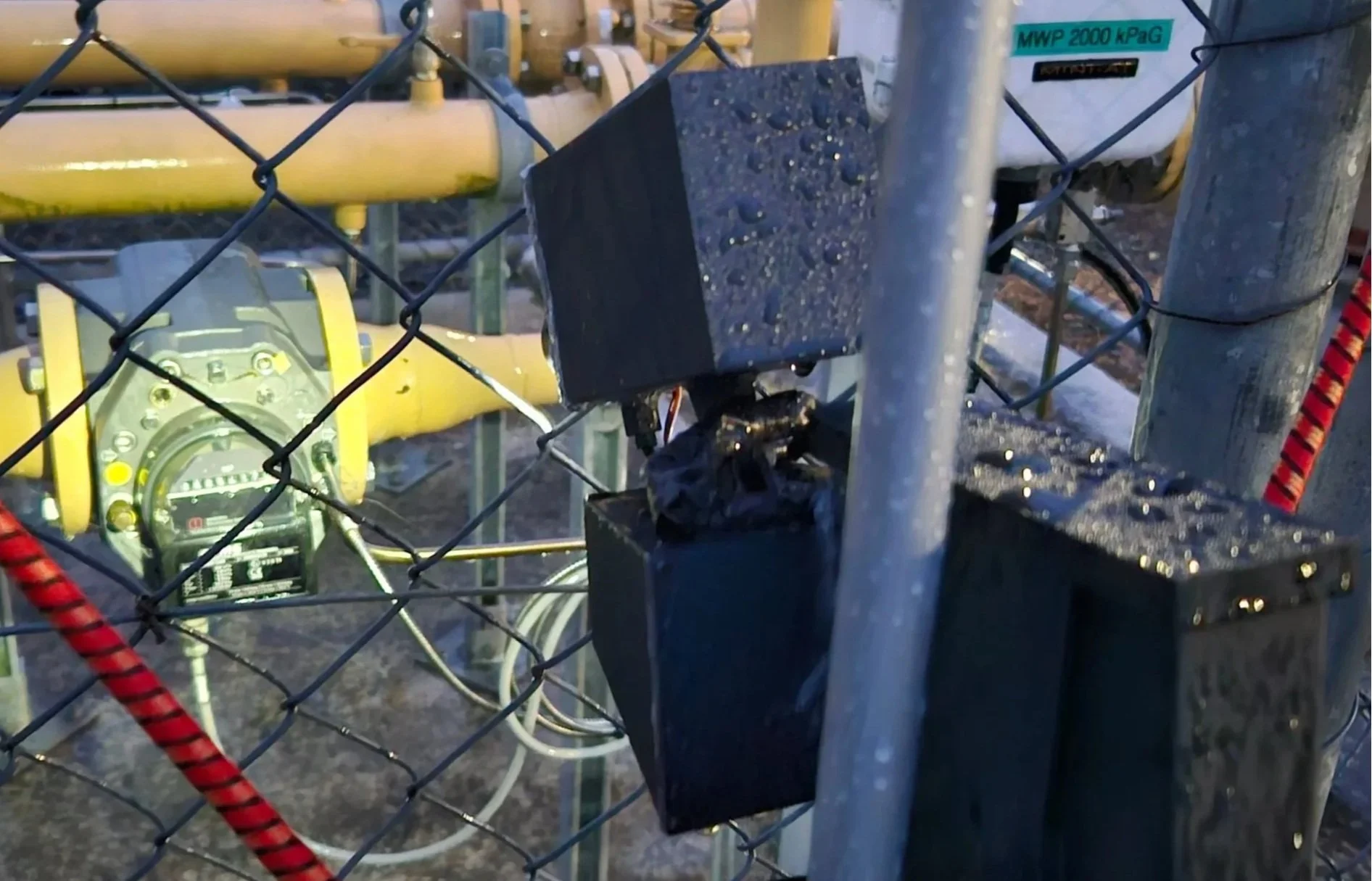
The result was striking. On one day alone, the 30-second resolution data revealed three separate spikes well above the maximum shown in the hourly supplier data, with the highest peak reaching almost double that figure.
Alongside the high-resolution monitoring, Whirika carried out a detailed energy balance across all of Apollo's heat-using processes - UHT sterilisation, Clean-in-Place (CIP) systems, batching, the filler, and the aseptic tank - mapping demand profiles, heat recovery opportunities, and the implications of the proposed UHT processing upgrade. On the supply side, we assessed diesel, LPG, biomass woodchip, wood pellets, and electric options against fuel costs, capital requirements, Hawke's Bay Regional Resource Management Plan air quality rules, and site constraints to identify which pathways were likely to be technically feasible, financially sensible, and suitable for Apollo's site.
Outcomes & Impact
The analysis gave Apollo a clear, financially grounded pathway forward. It identified several technically and economically viable options for reducing reliance on natural gas and provides an evidence base for future decision-making.
Some opportunities still require further validation before implementation decisions are made, but the study highlighted several useful actions:
CIP optimisation: early analysis suggests opportunities to optimise CIP processes could deliver potential savings of over $100,000 a year, subject to further refinement and validation.
Buffer storage opportunity: the assessment identified that Apollo’s existing CIP tanks could potentially be repurposed as buffer storage, helping smooth short-duration demand peaks and improve the practicality of future fuel-switching options.
Fuel-switching pathway: modelling showed a significant long-term cost difference between fuel options, with biomass woodchip modelled at roughly half the 20-year cost of continuing with natural gas business-as-usual, helping Apollo understand the scale of potential long-term cost exposure and the value of reducing reliance on gas.
Want to understand your real process heat demand before committing to major infrastructure decisions? Get in touch with Carl Newby, Senior Energy and Carbon Specialist, or Lloyd McGinty, Senior Energy, Biomass and Carbon Specialist.