
Proving Absence: Applying Ecological Science in the Possum Elimination Endgame
For decades, community-led possum control on the Otago Peninsula focused on one clear goal: removing animals. But as long running efforts by the Otago Peninsula Biodiversity Group pushed possum numbers ever lower, the challenge changed. When success means finding nothing, the hardest question becomes how to know when you are truly done.

Source: Dunedin NZ
As the operational programme progressed to the final stage of possum elimination, decision-making shifted from catching possums to judging confidence. Where should surveillance be focused, for how long, and using which methods? In the elimination endgame, where detections are rare and resources are finite, those decisions matter.
To meet this challenge, Whirika’s Principal Ecologist Dr Mike Thorsen led the development of Predator Free Dunedin’s Proof of Absence Assessment Tool. Built in close collaboration with the operational teams within Predator Free Dunedin, the tool provides an evidence-based way to interpret what the absence of detections really means, and to assess the likelihood that possums may still persist anywhere across the landscape.
“When possums are common, success is obvious,” says Mike. “Traps fill up, cameras trigger, and progress can be tracked in numbers removed. The real challenge is the endgame, when ‘we haven’t seen one lately’ could mean very different things.”
At very low densities, that phrase can reflect either true elimination or the presence of one or two animals slipping through gaps in surveillance. The Proof of Absence tool tackles this uncertainty directly by focusing on a simple set of questions: have you looked, using which methods, did you find anything, and how long ago was that effort?
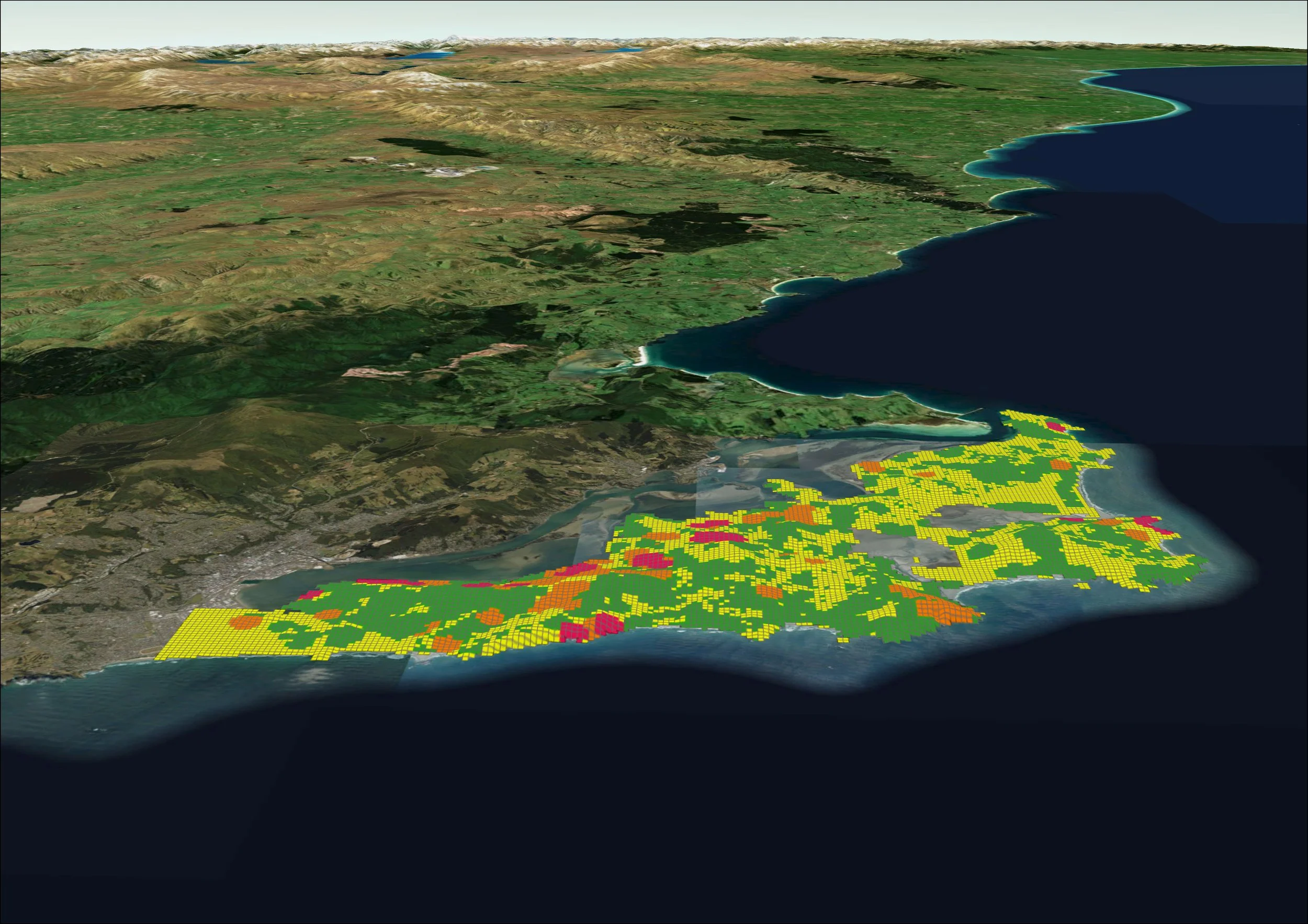
A screenshot of the Proof of Absence Tool, showing a traffic light view of residual pest risk across the Otago Peninsula.
The model combines spatial and temporal analysis of detections with the density and timing of search and control effort to produce a clear, traffic light view of residual risk across the Peninsula. Areas of higher uncertainty are highlighted alongside those where accumulated effort supports confidence of absence, helping teams prioritise surveillance and avoid unnecessary redeployment of people and equipment.
A major focus of Mike’s work was ensuring the tool reflected operational reality. It integrates the full suite of detection methods used by Predator Free Dunedin, including trap catch data via Trap.nz, trail cameras, a possum scat detection dog, thermal drone surveys in steep or inaccessible terrain, and community reported sightings. Habitat variation is explicitly included, recognising that possums persist and are detected differently in bush, scrub, farmland and urban environments.
Throughout development, model outputs were tested against field observations and refined through regular feedback from operational teams. Assumptions and weightings were adjusted as new information emerged, strengthening confidence in the tool and ensuring it remained fit for purpose.
While developed for possum elimination on the Otago Peninsula, the approach has wider relevance. For other predator free projects entering the elimination endgame, the work shows how combining multiple detection methods with rigorous spatial analysis can turn “no news” into defensible, decision-ready evidence.