
Spotlighting community action for a possum-free Dunedin
Spotlight on Possums shows how a simple, well-timed citizen science campaign can turn local curiosity into practical conservation data. Delivered by Predator Free Dunedin, City Sanctuary and The Halo Project, the annual winter survey invites people across Ōtepoti Dunedin to spend one evening after dark looking and listening for possums in backyards, parks, reserves and bushy neighbourhood edges, then report what they find online.
The Challenge
Possums remain one of the most damaging introduced predators in Aotearoa New Zealand, browsing native vegetation, competing with wildlife for food, and preying on birds, eggs and invertebrates. In Dunedin, where conservation work spans urban neighbourhoods, rural edges and the recently declared possum-free Otago Peninsula, knowing where possums are still present is critical. The challenge was to gather useful, city-wide information without making participation feel technical, time-consuming or limited to experienced trappers.
The Approach
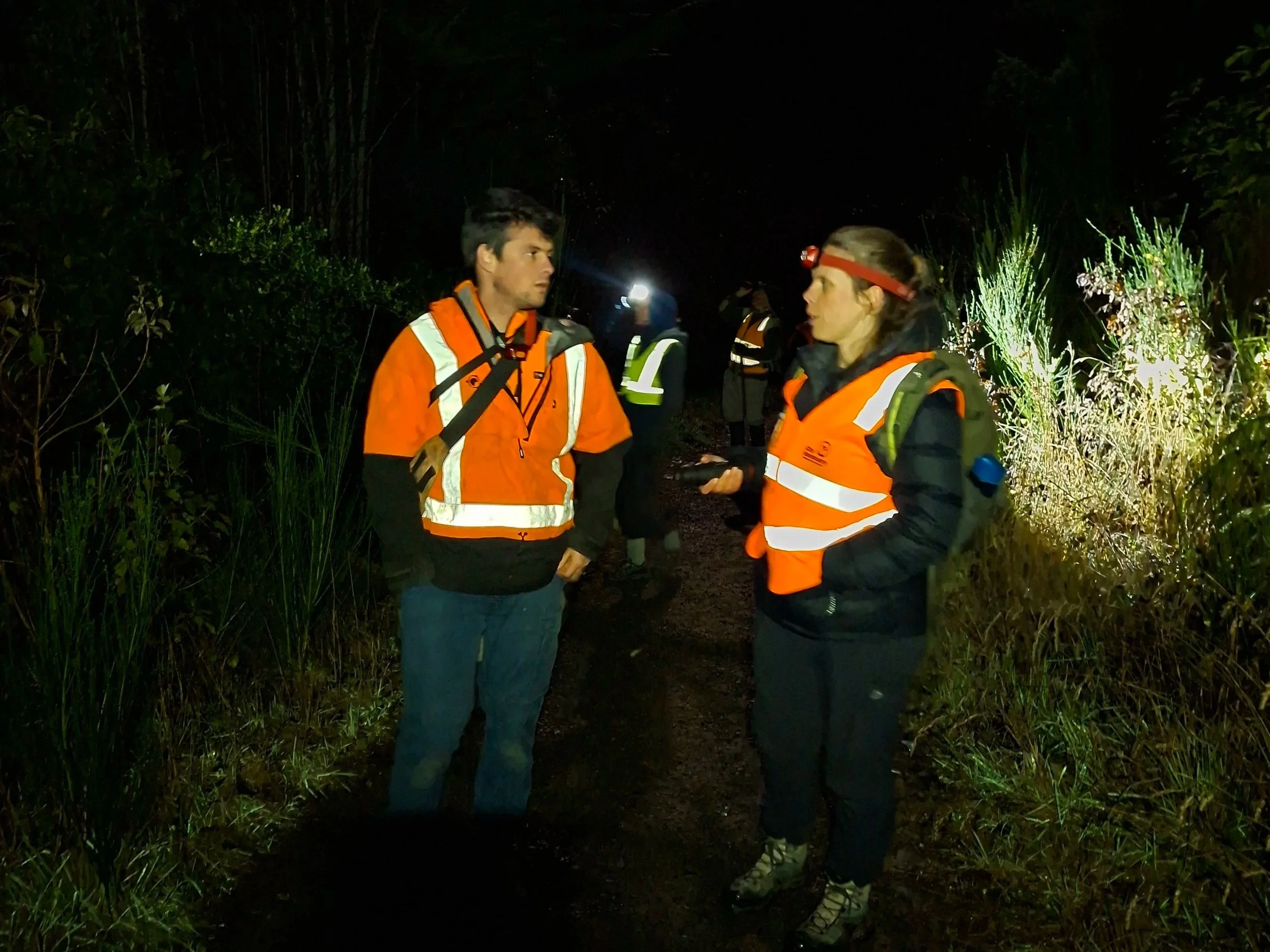
Lizzy from City Sanctuary and Harvey from The Halo Project head out possum spotting.
The campaign kept participation simple, useful and fun: choose a night during the survey week, rug up, take a torch to a familiar outdoor space, and report either a sighting or a no-possums-seen result. Framed as an awareness exercise as much as a data-gathering activity, Spotlight on Possums encouraged people to look differently at their own backyards, streets, reserves and bush edges, noticing the signs of possum activity and understanding why rapid reporting matters. This absence data was just as important as sightings, helping build a clearer picture of where possums were active — and where they were not — so delivery partners could better target follow-up work. The activity also created an easy entry point for intergenerational advocacy: children, parents, grandparents and neighbours could take part together, talk about what they saw, and carry the predator-free message back into their homes, schools and communities. Alongside the practical instructions, a playful social media campaign helped turn the survey into something people could enjoy and share, using humour to lower the barrier for families, first-time participants and people who want to help conservation but may not be comfortable trapping.
The Impact
Built a clearer picture of possum presence and absence across Dunedin, helping delivery partners focus follow-up effort in the right places.
Supported ongoing vigilance around the Otago Peninsula, where rapid reporting is essential to protect the hard-won possum-free status.
Gave residents a practical, low-pressure way to contribute to predator-free goals, including people who may not usually take part in trapping or monitoring, while building awareness of what possum activity looks like close to home.
Turned a simple night-time observation activity into an intergenerational advocacy moment, helping families and neighbours learn together and share why possum control matters for Dunedin’s native biodiversity.
Showed how community observations can complement formal monitoring and support landscape-scale conservation.
Spotlight on Possums worked because it translated a technical monitoring need into a familiar community activity and awareness exercise. Instead of asking people to become pest control experts, it asked them to notice what was happening in places they already knew, and to see their observations as part of a shared responsibility for protecting local biodiversity.
It is a strong example of how community-led data can support predator control, protect biodiversity gains, and strengthen intergenerational advocacy by keeping people connected to the shared vision of a predator-free Dunedin by 2050.